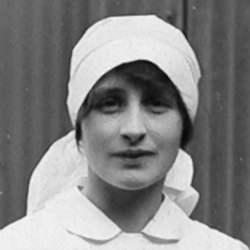
Vera Brittain was a writer, feminist and pacifist best known for Testament of Youth, her memoir of the First World War and its aftermath.
Vera Brittain
England's Hour
Macmillan, 1941.
On the last day of May [1940] Martin and I walk in Regent's Park amid shaded mauve pansies and pale pink lupins. "It's just like Sunday," I remark to him, for the park is so deserted that it suggests a hot summer holiday when everyone who possesses something on wheels has gone into the country. Since most of the iron railings have now been removed from London's parks and squares for conversion into armaments, Regent's Park resembles a vast green field, very fresh and vivid. A few elderly people are sitting in chairs, a few young ones sailing boats with striped sails. Again, as in the New Forest, comes the strange illusion of peace, due largely to the beauty of the summer and its scents and sounds. We feel as though we are watching the funeral of European civilizations elegantly conducted. Just so the Roman Empire must have appeared before the barbarians marched in
The author of Testament of Youth had become a pacifist after her experience in World War One as a nurse at a field hospital in France. In September 1939 she had started publishing Letters to Peace Lovers, a journal that expressed her views on the present war.
Recollections come back to me of early morning walks taken after the "All Clear" had ended one more nightly onslaught; of waking up, fully dressed, from a comfortless doze in the basement to stroll through the chill dawn loveliness of Regent's Park while incendiary bombs still smouldered on adjacent rooftops. I walked there in the early morning of Sunday, September 15th, when the newspapers reported that the Nazi forces were already massed for invasion