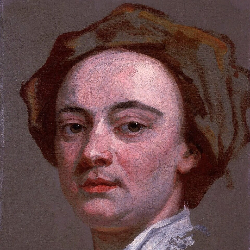
John Gay was an English poet and dramatist, best known for the ballad opera The Beggar's Opera.
John Gay
The Beggar's Opera
1728. Reprinted in The Beggar's Opera and Other Eighteenth Century Plays. Intr. David W. Lindsay. Everyman/J.M. Dent, 2000.
Macheath: There will be deep play tonight at Marybone, and consequently money may be picked up upon the road. Meet me there, and I'll give you the hint who is worth setting...There is a certain man of distinction who in his time has nicked me out of a great deal of the ready. He is my cash, Ben; I'll point him out to you this evening, and you shall draw upon him for the debt...So gentlemen, your servant. You'll meet me at Marybone.
Macheath is briefing his gang of highway robbers for a sortie to Marylebone Gardens, a resort popular with gamblers. (And with criminals - at one time the proprietor had to hire a guard of soldiers to protect his customers on their way to and from London.) But Peachum, whose daughter Macheath has secretly married, thinks 'the captain keeps too good company ever to grow rich. Marybone, and the chocolate-houses, are his undoing.' The 'author', a beggar, comes on stage at the end to point the moral: 'It is difficult to determine whether (in the fashionable vices) the fine gentlemen imitate the gentlemen of the road, or the gentlemen of the road the fine gentlemen'.
The success of The Beggar's Opera meant that Gay could indulge in the fashionable vices himself, including dog-fighting. In his Fables (1728-1738) he wrote, 'Both Hockley-hole and Mary-bone / The combats of my Dogs have known' (Fable XXXIV - The Mastiffs).