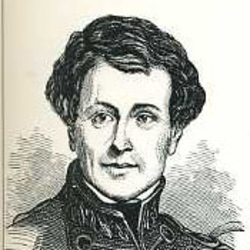
Alexander Slidell Mackenzie was a United States naval officer, travel writer and naval historian.
Alexander Slidell Mackenzie
The American in London
1835. George Clark and Son, 1848.
From Macclesfield Bridge, which is a beautiful construction of cast iron, I took in a pleasing view of the banks of the Canal, of Primrose Hill, the holiday resort of the jaded artisans of either sex, and the curious scene of practical jokes, and sturdy and somewhat unscrupulous gambols...The laugh and lively prattle of children, too, gave to the scene its most pleasing character of animation. Some were ferried over the water in pretty wherries, while others, hanging over the railings of the airy bridges which spanned the stream, seemed delighted to divide their luncheon with the majestic swans which sailed proudly below, and which for a moment forgot their stateliness and dignity in their eager efforts to catch the descending morsels
The author, a lieutenant in the U.S. Navy, had made his name as a writer when he was 26 with the first of a series of travel books. The entrance to Regent's Park, he noted approvingly, 'was defended by railings and gates of iron, which may be closed at pleasure, to shut out intruding stage coaches, omnibuses, loaded carts, or aught that is unseemly or inelegant.' A New Yorker by birth, he pointed out that Nash's 'magnificent palaces...are not more expensive to the tenant than the graceless edifices of equal size from which our city magnates look out rejoicingly into the dust, tumult and deafening clatter of Broadway.'
The Park Villages too won his approval. Emerging from Gloucester Gate 'and walking a few steps, [I] came to a bridge over the Regent's Canal, on the banks of which stands a charming collection of little ornamental cottages of the Elizabethan, Gothic, or Saxon architecture. Many of these have a grotesque and quaint appearance, yet the effect of the whole is pleasing and agreeable. Small, but beautifully arranged gardens and mimic conservatories swept down to the borders of the stream'
A visit to the Zoo is described later in the same book.